
Arrive along the coastal road at dusk, when the lights of Grand Baie shimmer across the lagoon, and it becomes immediately clear that northern Mauritius operates on its own terms. This is where the island concentrates its energy — and its contradictions. A thoroughly modern shoreline sits alongside landscapes of undisturbed beauty; century-old temples appear between surf shops; and the sea, ever-present, sets the pace for everything else.
But the north is also a place of deep time. Every village name, every building that has weathered another cyclone season, carries within it several centuries of imperial rivalry, trading routes and layered memory. It is precisely this quiet density that sets the northern coast apart from more straightforwardly beguiling stretches of Mauritian coastline.
1735: La Bourdonnais shapes the North
Before it was a destination, the north of Mauritius was a project. When Bertrand-François Mahé de La Bourdonnais arrived on the Isle de France in 1735 as governor-general of the Mascarene Islands on behalf of the French East India Company, he found a barely administered territory, thickly forested and haunted by runaway enslaved people holding out in the highlands. Within five years of restless energy, he had founded Port-Louis, laid roads, dug canals — and planted the island's first commercial sugarcane in the district of Pamplemousses, in the north.
It was there, at Villebague, that he established Mauritius's first sugar mill. The Saint-Géran, a Company vessel, shuttled back and forth between France and the north of the island carrying the necessary equipment — until it foundered in 1744 on the coral reef off Poudre d'Or. That shipwreck, later immortalised by Bernardin de Saint-Pierre in Paul et Virginie, is also, in its way, the founding myth of the north's economic history.
La Bourdonnais also laid out a kitchen garden on his Mon Plaisir estate at Pamplemousses, intended to provision ships on the India run. Under the botanist Pierre Poivre and, later, under British rule, that garden would become one of the great botanical collections of the southern hemisphere. The Malouin governor's vision remains inscribed in the landscape: the château that bears his name at Mapou, the garden he founded, the traces of his first mill at Villebague — each a witness to an era when the north of the island was still being invented.
Note — Mahé de La Bourdonnais (1699–1753) governed the Isle de France from 1735 to 1740. By his death, Port-Louis had been established, sugarcane planted across the north and the India route partly secured. The French National Library notes that Mauritians have long held him in something approaching veneration.
29 November 1810: the day the north changed everything
The name Cap Malheureux — Cape of Misfortune — was not chosen idly. It was here, at the island's northernmost point, that one of the most consequential episodes in Mauritian history unfolded on 29 November 1810. A British fleet carrying ten thousand men, having already taken Rodrigues, landed along the northern bays, deliberately sidestepping French defences concentrated around Port-Louis. The troops advanced inland along a forest track known as the chemin vingt pieds — the twenty-foot path — heading south towards the capital.
The timing carried a particular sting. Just months earlier, in August 1810, French frigates had inflicted on the Royal Navy its only naval defeat of the Napoleonic era at the Battle of Grand Port — a victory sufficiently celebrated to be inscribed on the Arc de Triomphe. Yet the north, less fortified and far more accessible, offered the invaders an opening that Governor Decaen's four thousand men could not hold. By 3 December 1810, fewer than five days after the landing, the capitulation had been signed. The Isle de France became Mauritius.
Today, at Bain Bœuf, a modest monument marks the precise landing point. Visitors tend to pass it without stopping, eager to reach the beach. Yet this unremarkable stretch of coast is one of the places where the fate of an island — and the political map of the Indian Ocean — shifted in the course of a single morning.
Note — The Treaty of Paris of 1814 formally ceded Mauritius to the British Crown. French settlers were permitted to remain, retaining their language, their civil law and the Napoleonic Code. That dual inheritance — French by culture, British by administration — continues to shape Mauritian society to this day.
Grand Baie: the beating heart of the north
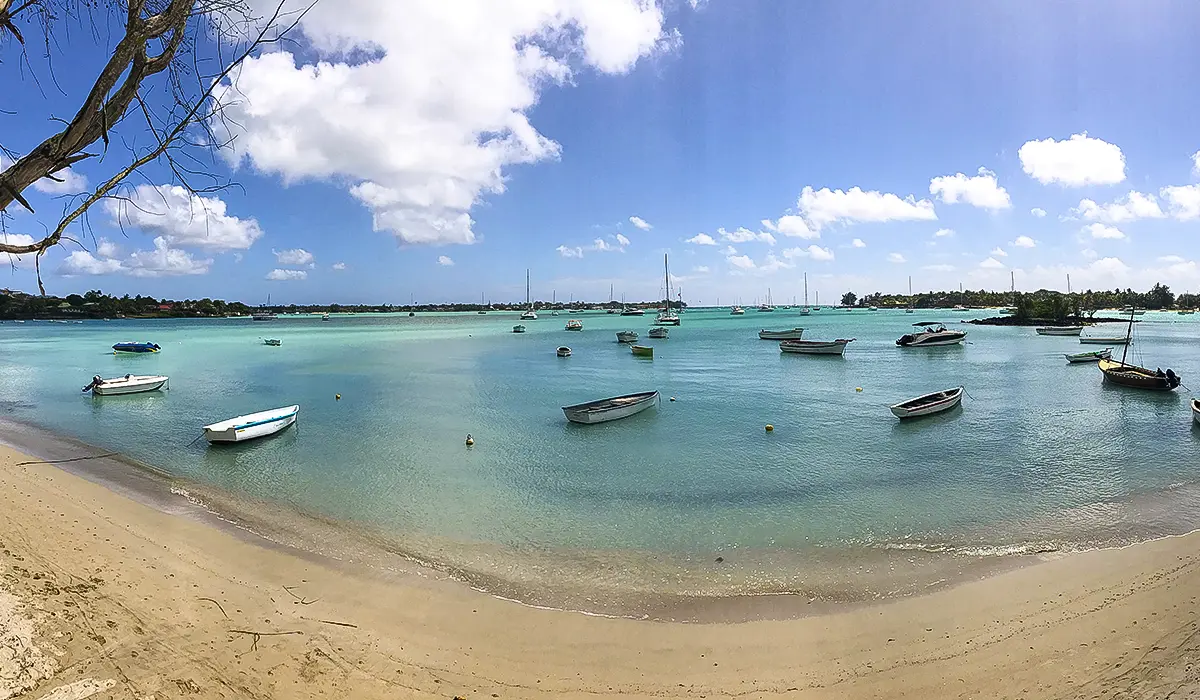
Grand Baie is the unofficial capital of Mauritian tourism, and it knows it. Its busy shopping streets, colourful markets and fifty-odd restaurants make it a destination in its own right, quite apart from its beach. The Grand Bazar draws visitors hunting for souvenirs and locals after a proper market atmosphere in equal measure. After dark, beach clubs fill as the sun drops, and the night stretches on in establishments that need not envy their counterparts in livelier Indian Ocean cities.
Grand Baie is also a natural base of operations. Pamplemousses, the Château de Labourdonnais and the red-roofed church at Cap Malheureux are each within half an hour. Out at sea, catamarans slip their moorings every morning bound for the northern islands.
Beaches: from Trou aux Biches to Cap Malheureux
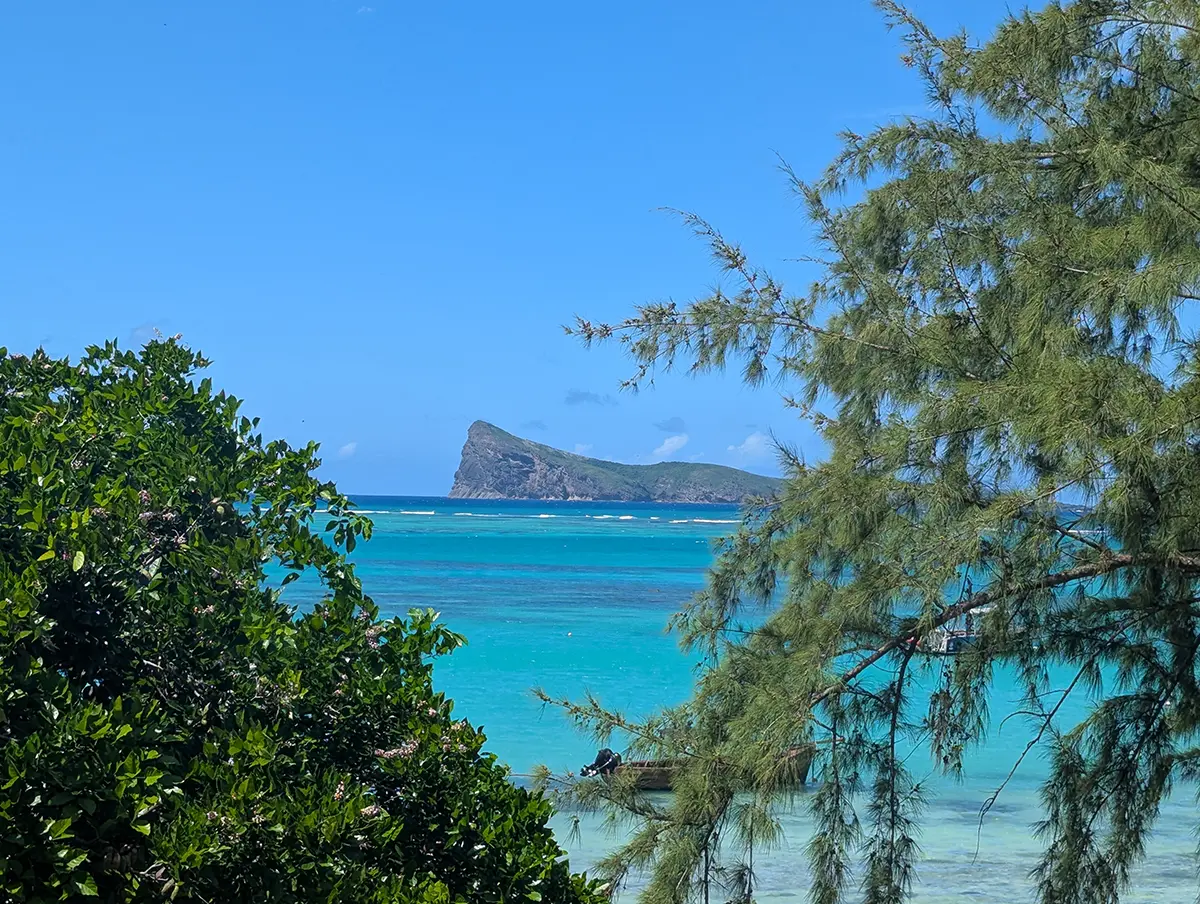
The string of beaches along the northern coast ranks among the most celebrated on the island. Mont Choisy impresses through sheer scale — several kilometres of fine sand beneath ancient casuarina trees. Trou aux Biches, with its almost implausibly blue lagoon, supplies the postcard image the world associates with Mauritius. Pereybère draws a younger, more international crowd. Cap Malheureux, at the island's northern tip, offers something altogether more singular: from here the eye travels out to Coin de Mire, a volcanic silhouette resting on the horizon.
What these beaches share, beyond beauty, is an accessibility that sets them apart. The northern lagoon, sheltered by the coral reef, stays calm throughout the year, making it reliable for swimming, kayaking and stand-up paddleboarding in all seasons.
The northern islands: out to sea
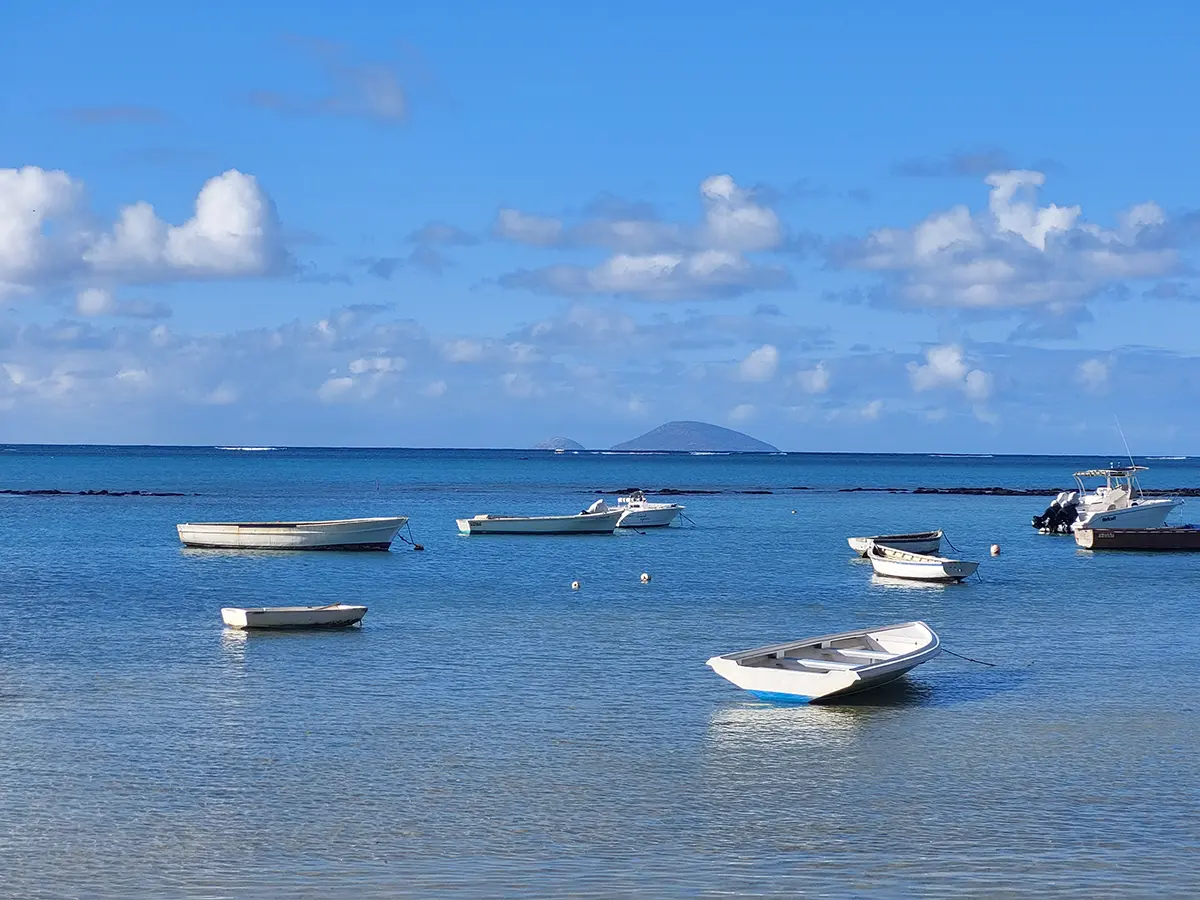
A few miles offshore, a scatter of islets preserves what the mainland has sometimes lost. Coin de Mire — named after the wedge-shaped iron blocks gunners used to adjust cannon elevation — rises in basalt cliffs seven kilometres to the north. Its waters, rich in marine life, rank among the finest diving and snorkelling destinations in the western Indian Ocean.
Îlot Gabriel is something closer to a waking dream: immaculate white sand, transparent water, no permanent infrastructure. Catamaran excursions from Grand Baie reach this sanctuary in under an hour, often combined with Flat Island and Round Island, the latter a nature reserve for endemic species found nowhere else on earth.
Pamplemousses: a garden of deep time
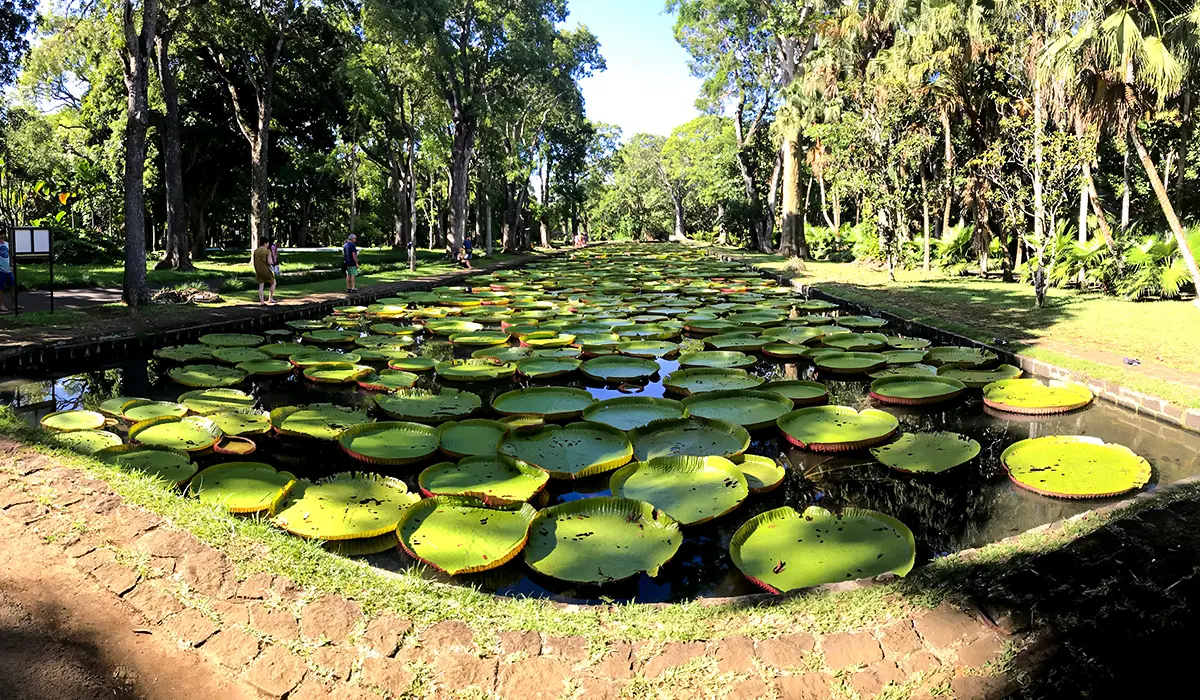
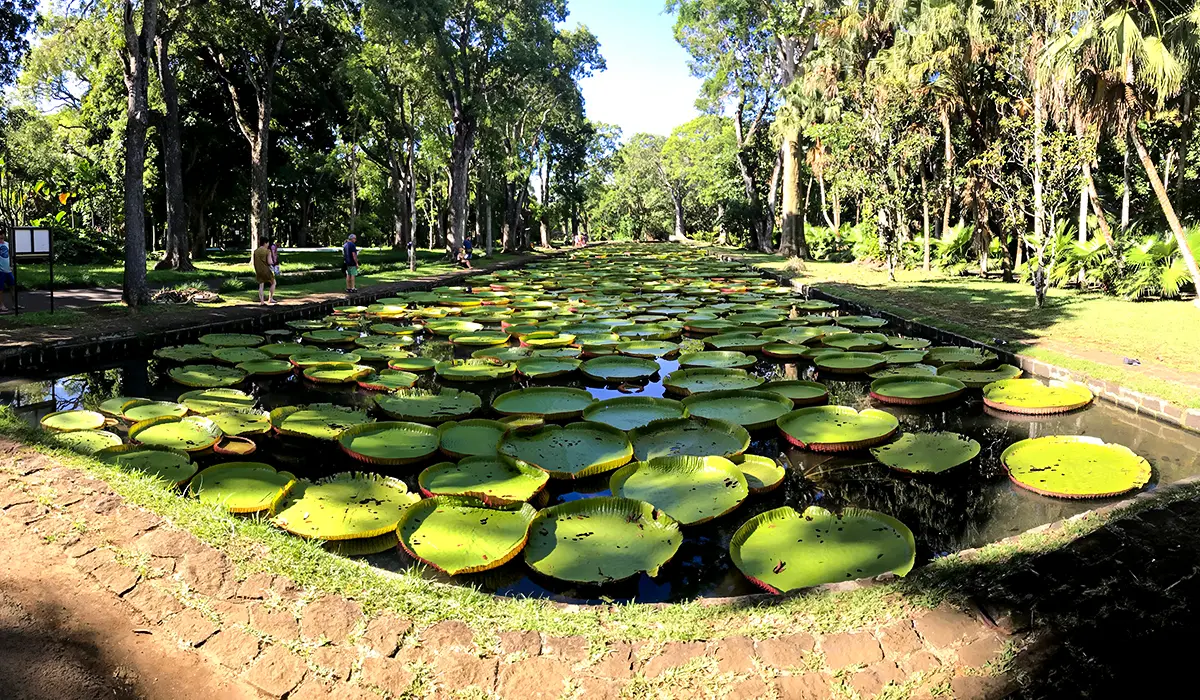
Halfway between Port-Louis and Grand Baie, the Sir Seewoosagur Ramgoolam Botanical Garden justifies a journey from any corner of the island. Its history begins with La Bourdonnais in 1735, who established a provisioning garden here for ships on the India run. Pierre Poivre, botanist and intendant of the Isle de France from 1767, transformed it into a living laboratory, introducing species from Asia, the Americas and Africa. The British rebuilt the Château de Mon Plaisir on the grounds in 1823 — an apt metaphor for a place that every successive administration has sought to claim as its own.
Today its 37 hectares shelter 85 varieties of palm, giant Amazonian water lilies and a spice garden that scents the air. Trees planted by Indira Gandhi, François Mitterrand and Nelson Mandela punctuate the paths like markers in a world history that once, for a time, looked towards Mauritius.
L'Aventure du Sucre: the memory of industry
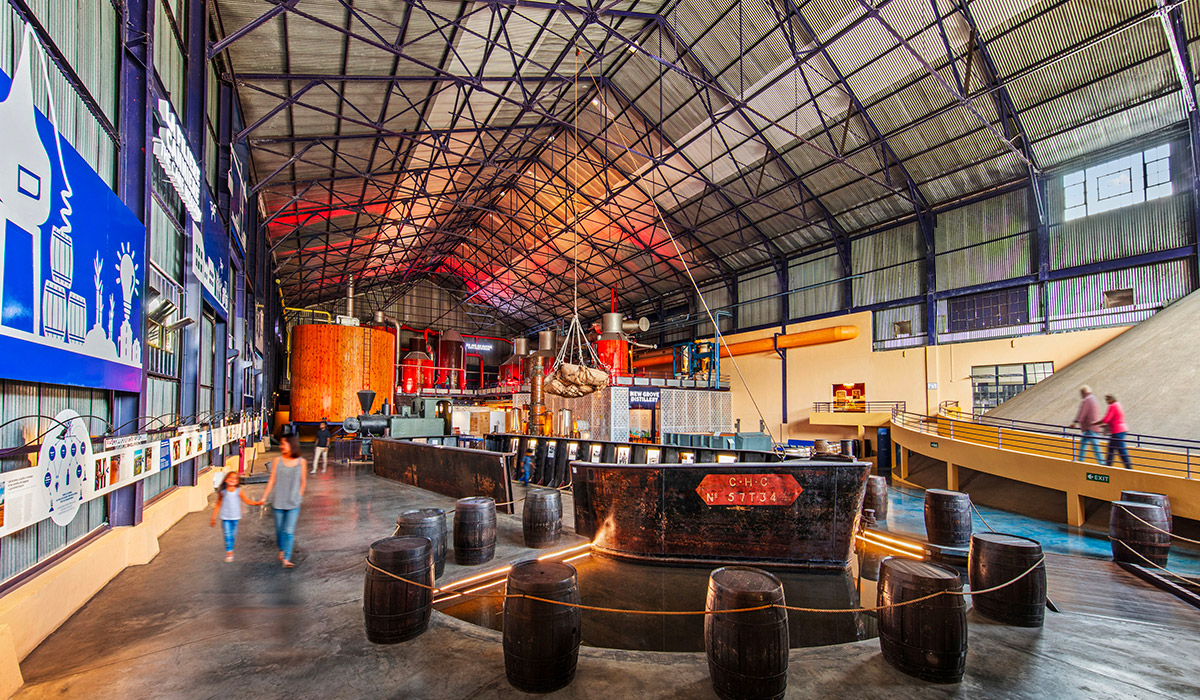
At Beau Plan, a former sugar mill converted into a museum traces two centuries of the island's sugar history with a sophistication rarely encountered in the Indian Ocean. L'Aventure du Sucre does not simply display artefacts: it reconstructs the conditions endured by enslaved workers, then by indentured labourers from India who replaced them after the abolition of slavery in 1835, and maps the commercial flows that shaped Mauritian society. The visit ends with tastings of rum and honey produced on site. The industrial north that La Bourdonnais set in motion at Villebague in the eighteenth century finds here its most considered museum-form.
The Château de Labourdonnais: elegance restored
At Mapou, the Château de Labourdonnais stands as one of the finest examples of Mauritian colonial architecture. Founded in 1774, the estate is built around a mid-nineteenth-century manor house, surrounded by manicured grounds, a rum distillery and orchards of heritage fruit varieties. Its restoration, carried out with care by the Wiehe family, has returned a rare coherence to the whole. A gastronomic restaurant on site serves dishes built around the estate's own produce. The château takes its name from the Malouin governor without having belonged to him directly — a topographical coincidence that says more than any commentary could about how thoroughly La Bourdonnais has marked the imagination of the north.
A layered faith: the plural north
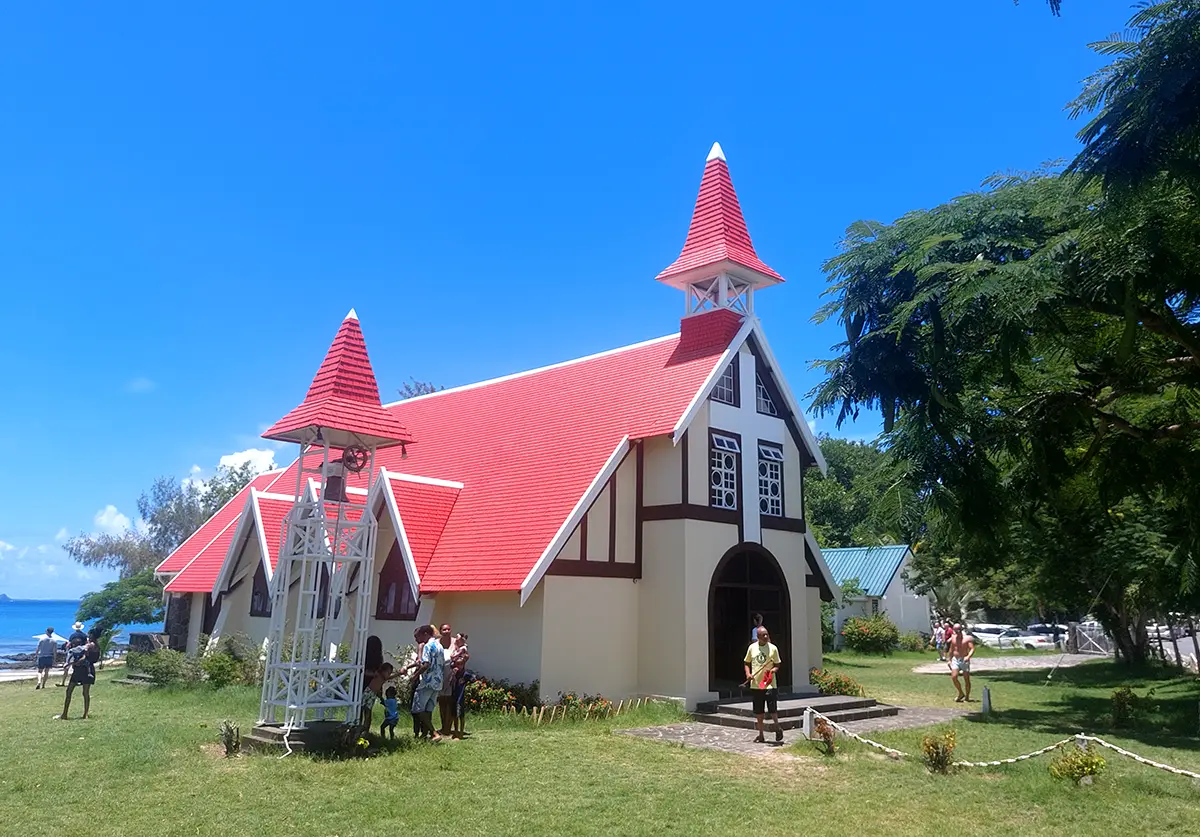
What most distinctly sets northern Mauritius apart from other island destinations is the density of its religious and cultural landmarks. At Triolet, the Maheswarnath Mandir is the largest Hindu temple on the island. Founded in 1888 and completed in 1891, it receives thousands of worshippers each year during major Tamil and Hindi celebrations. Its richly decorated gopurams bear witness to the waves of indentured workers who came from India after abolition — a memory the north carries as much in its living landscapes as in its museums.
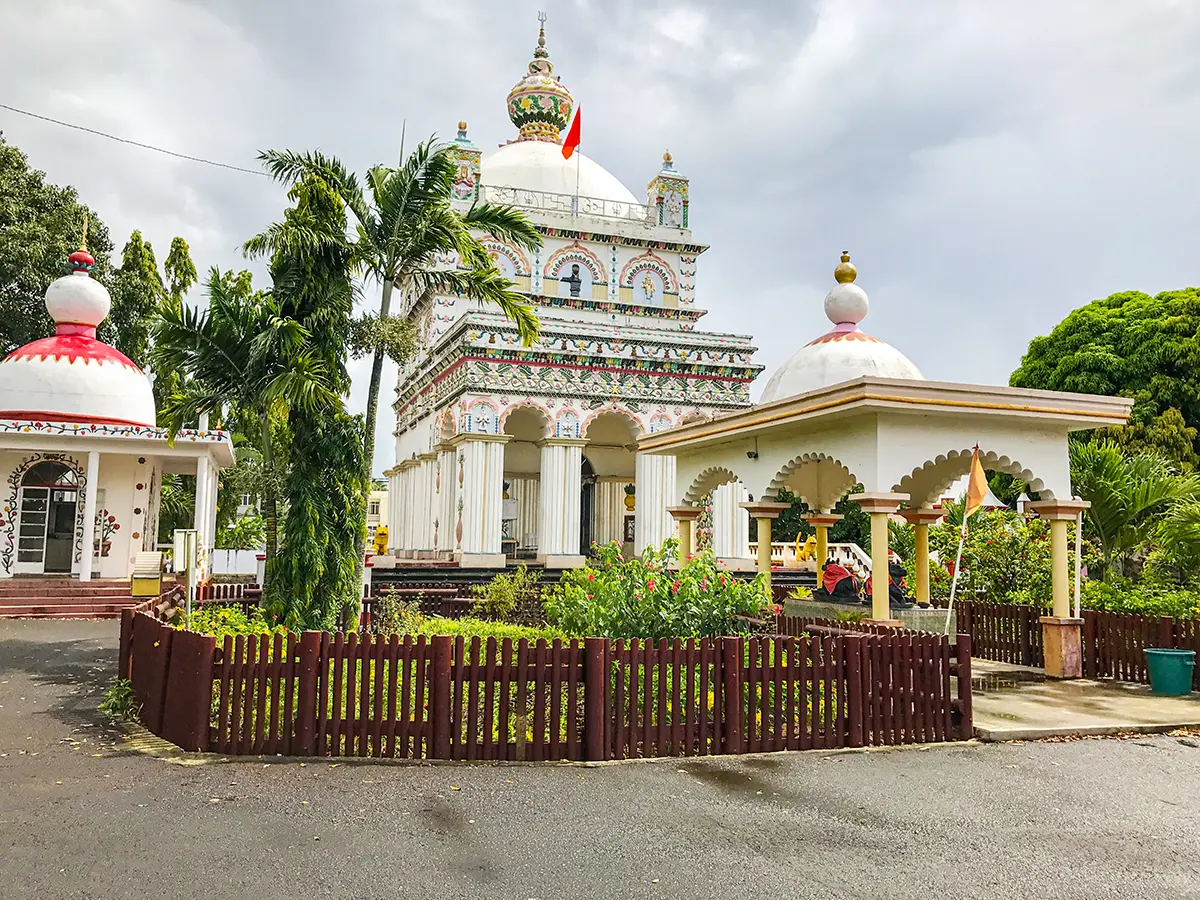
At the island's northern extremity, the church of Notre-Dame Auxiliatrice at Cap Malheureux, with its bright red roof and ochre façade facing the sea, has become the most reproduced image in Mauritius. It is a reminder that the north was long the entry point of colonial powers — Dutch, French, British — and that this succession of presences produced a culture of singular richness, where Creole, French, Hindi and English coexist without quite merging.
The north is not the Mauritius of the brochures. It is, rather, a place of acknowledged contrasts: between the quiet luxury of lagoon hotels and the frank energy of the market; between coral reefs submerged in silence and the noise of Grand Baie terraces after dark; between the British soldiers who came ashore at Bain Bœuf one November morning in 1810 and the leisure craft anchored at the same spot today, indifferent to what history left behind there. This is a region with the advantage of those who know how to be several things at once. And that is precisely why one returns — not because everything has been seen, but because something always remains to be found past the last bend in the coastal road.
— Mauritius Tourism | ilemauricetourisme.info